Understanding Quarantine Requirements in Today’s World
Quarantine requirements vary significantly based on your location, vaccination status, and the specific circumstances of potential exposure to infectious diseases. Here’s what you need to know right now:
Quick Answer:
- Quarantine = Stay home after exposure to see if you become sick
- Isolation = Stay home when you are already sick
- Federal quarantine = Applies to specific diseases like cholera, plague, and pandemic flu (in the U.S. context)
- Most respiratory illnesses = Stay home until fever-free for 24 hours without medication
- International travel = Requirements differ by country; many have dropped mandatory quarantine
Understanding quarantine requirements has become essential knowledge for travelers, workers, and anyone who might be exposed to contagious diseases. The rules can feel confusing because they change based on whether you’re exposed to illness or already sick, where you’re traveling, and what disease is involved.
The COVID-19 pandemic brought quarantine and isolation back into everyday conversation. These public health measures aren’t new—large-scale federal quarantine was last enforced during the 1918-1919 influenza pandemic (in the U.S.). But today’s requirements look very different than they did even a year ago.
The key difference: Quarantine separates and restricts movement of people who might have been exposed to see if they get sick. Isolation separates people who are already sick to keep the disease from spreading to others. The process for both is similar—stay home, separate yourself, monitor your health—but the reason you’re doing it matters for how long and under what circumstances.
For international travelers, vaccination status often determines whether you need to quarantine at all. Many countries, including Canada, have dropped mandatory quarantine for vaccinated arrivals. Others still require testing within 24 hours of arrival and self-isolation until you receive negative results.
This guide will walk you through the legal framework behind quarantine authority, current requirements for respiratory illnesses like COVID-19, international travel rules, and practical steps for quarantining safely at home.
Foundations of Quarantine and Isolation

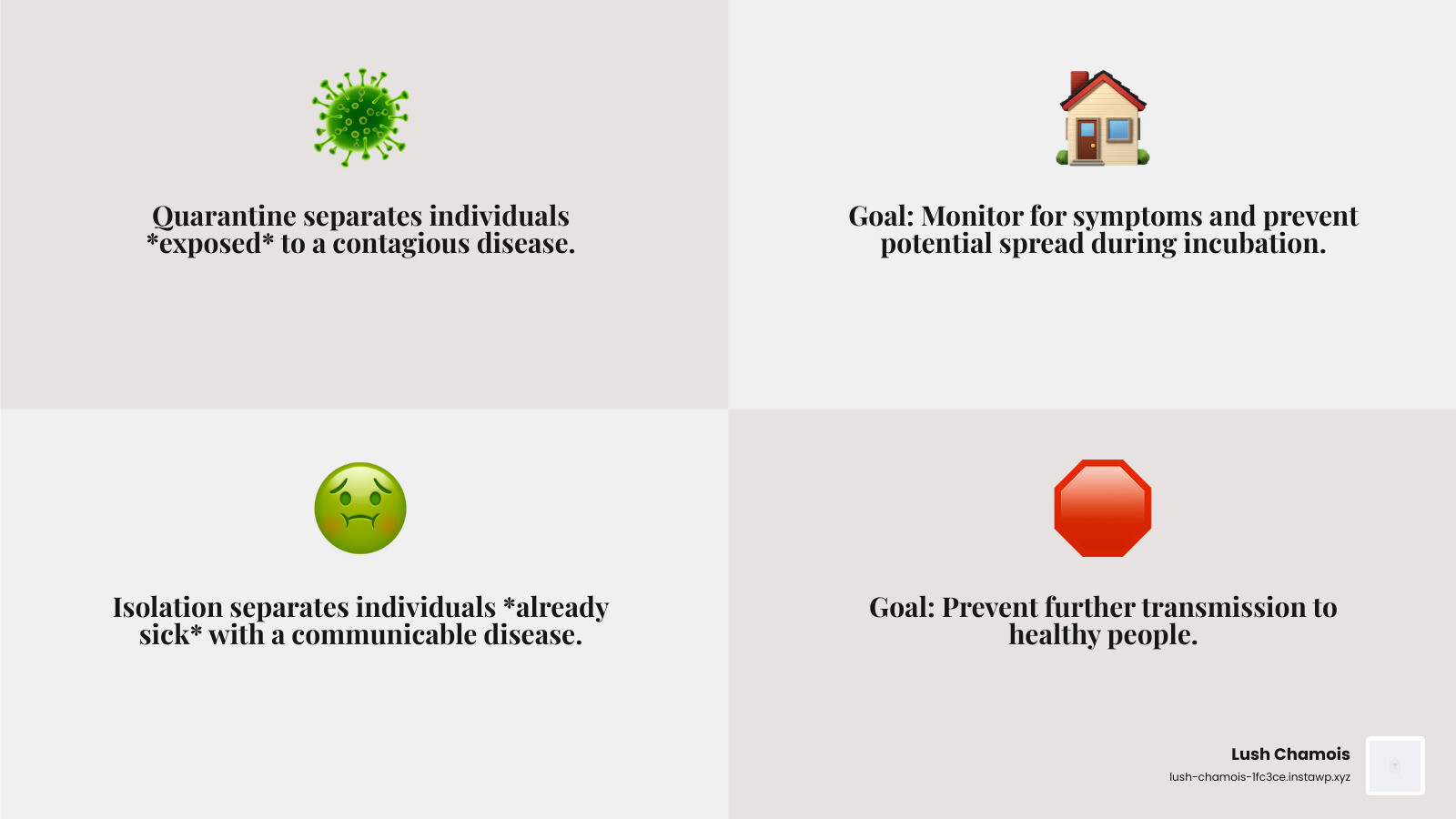
At its heart, “quarantine” means separating and restricting the movement of individuals who may have been exposed to a contagious disease. The goal is to see if they become sick, preventing potential spread during the incubation period. “Isolation,” on the other hand, is for those who are already sick with a communicable disease, keeping them away from healthy people to prevent further transmission. Both are crucial public health tools.
The Legal Framework in the U.S.
While our focus at Lush Chamois is on Canadian health and travel, it’s helpful to understand the broader legal context of quarantine requirements. In the U.S., federal isolation and quarantine powers are derived from the Commerce Clause of the U.S. Constitution and are authorized under section 361 of the Public Health Service Act. This allows the U.S. Secretary of Health and Human Services to prevent the entry and spread of communicable diseases.
The Centers for Disease Control and Prevention (CDC) plays a significant role in the U.S., authorized to detain, medically examine, and release persons arriving into the United States and traveling between states if they are suspected of carrying certain communicable diseases. They also monitor individuals at U.S. ports of entry.
State, local, and tribal authorities in the U.S. also have their own powers to enforce isolation and quarantine within their borders, often referred to as “police power” functions. In cases of conflict, federal law is supreme. Breaking a federal quarantine order in the U.S. is considered a federal crime, punishable by fines and imprisonment, with enforcement assisted by law enforcement agencies like U.S. Customs and Border Protection and the U.S. Coast Guard. Historically, large-scale federal isolation and quarantine in the U.S. was last broadly enforced during the influenza (“Spanish Flu”) pandemic of 1918–1919.
Federally Quarantinable Diseases
In the U.S., federal isolation and quarantine are authorized by Executive Order of the President for a specific list of communicable diseases. These include:
- Cholera
- Diphtheria
- Infectious tuberculosis
- Plague
- Smallpox
- Yellow fever
- Viral hemorrhagic fevers
- Severe acute respiratory syndromes (SARS)
- Flu that can cause a pandemic
- Measles
It’s crucial to remember that these are U.S. federal guidelines. In Canada, public health measures, including quarantine requirements, are typically managed at the provincial and territorial levels, with federal oversight for international borders.
Understanding Current Quarantine Requirements for Respiratory Illnesses

In Canada, much like in other parts of the world, our approach to managing respiratory illnesses like COVID-19, influenza (flu), and respiratory syncytial virus (RSV) has evolved. The focus has largely shifted from broad, mandatory quarantine requirements to emphasizing core prevention strategies and individual responsibility when sick.
Core and Additional Prevention Strategies
The general wisdom for staying healthy and preventing the spread of respiratory viruses is now quite similar across the board. The CDC, for instance, recommends several core strategies that we also champion in Canada:
- Stay Up-to-Date with Vaccinations: For illnesses like COVID-19 and the flu, vaccines significantly lower your risk of severe illness, hospitalization, or death. While vaccinated individuals can still get sick, the severity is usually much less. We always encourage you to discuss vaccination options with your primary care provider.
- Practice Good Hygiene: This is a classic for a reason! Regularly wash your hands thoroughly, especially after coughing, sneezing, or being in public. Cover your mouth and nose when you cough or sneeze. Cleaning and disinfecting frequently touched surfaces also helps break the chain of transmission.
- Ensure Cleaner Air: Improving indoor air quality, perhaps through ventilation or air purifiers, can make it harder for respiratory viruses to spread.
- Wear a Mask: While not always mandatory, wearing a well-constructed and well-fitted mask or respirator is a highly effective additional prevention strategy. Research shows it’s effective in reducing the spread of respiratory viruses. This is particularly useful when you’re sick, when community transmission is high, or when you’re around individuals with a weakened immune system.
- Physical Distancing: Maintaining a physical distance from others, especially in crowded indoor settings, can further reduce your risk of exposure.
- Protect Your Immune System: Simple lifestyle choices like getting enough sleep, managing stress, exercising regularly, and taking care of chronic health conditions can all help bolster your body’s natural defenses.
These strategies are especially important when respiratory viruses are causing a lot of illness in our communities, or if you or someone around you has risk factors for severe illness.
When to Stay Home and When to Return
When you’re feeling under the weather with a respiratory illness, the general rule of thumb across Canada and beyond is to stay home. Rest is a powerful tool for recovery, and it also prevents you from spreading germs to others.
- When to Stay Home: If you have symptoms like a runny nose, sore throat, cough, or especially a fever, it’s best to stay home.
- When to Return to Activities: You can generally return to work, school, or other normal activities when you meet these criteria:
- You have been symptom-free (including no fever) for at least 24 hours.
- You are no longer taking fever-reducing medication like acetaminophen (Tylenol®) to control your fever.
After your symptoms improve, it’s still a good idea to take extra precautions for about five days, such as wearing a mask when around others and limiting unnecessary contact. This helps ensure you don’t inadvertently spread lingering germs.
If you are a parent, knowing when to keep your child home from school is key. The same 24-hour symptom-free rule generally applies.
For those who have been in “close contact” with someone sick, the need for quarantine requirements has also evolved. While definitions can vary slightly, close contact generally means being closer than 6 feet from someone with the virus for a cumulative total of 15 minutes or longer within a 24-hour period. In Canada, current guidance for exposed individuals often emphasizes symptom monitoring and mask-wearing rather than mandatory quarantine, especially if you’re vaccinated and asymptomatic. However, if you develop symptoms after exposure, the “stay home” rule kicks in.
Quarantine and International Travel
International travel has seen some of the most dynamic changes in quarantine requirements over the past few years. What was once a complex web of mandatory quarantines, multiple tests, and strict documentation has largely simplified, especially for countries like Canada. However, it’s still crucial to be informed, as rules can change, and other destinations may have different policies.
Navigating International Travel Quarantine Requirements
For travellers entering Canada by air, land, or marine mode, the good news is that many of the stringent COVID-19 quarantine requirements have been lifted.
According to COVID-19 travel rules for Canada:
- Proof of COVID-19 vaccination is NOT required.
- Pre-board testing is NOT required.
- COVID-19 pre-entry and arrival tests are NOT required.
- Quarantine after you enter Canada is NOT required.
- Using ArriveCAN is also no longer required, although you can use its Advance Declaration feature to save time at the border.
While not mandatory, the Public Health Agency of Canada still strongly recommends that you wear a well-constructed and well-fitted mask or respirator while you travel.
This represents a significant shift from earlier policies that included mandatory hotel quarantine for unvaccinated international arrivals. For instance, in Australia, as of April 30, 2022, unvaccinated international arrivals were no longer required to undertake hotel quarantine and followed the same guidelines as fully vaccinated arrivals, including taking a rapid antigen test within 24 hours of arrival. Similarly, the Philippines previously had detailed entry, quarantine, and testing requirements based on vaccination status and age. These examples highlight how quickly quarantine requirements can change and why staying updated for your specific destination is paramount.
What to Do if You Get Sick While Traveling
Even with relaxed quarantine requirements, it’s always possible to get sick while traveling. If you develop COVID-19 symptoms while abroad or upon arrival in Canada:
- Do not travel to Canada if you have symptoms of COVID-19. This is a key recommendation from the Canadian government.
- Notify Authorities: If you feel sick or experience symptoms during your travel or upon arrival, inform the flight attendant, cruise staff, or a border services officer. You may be referred to a Quarantine Officer for a health assessment and further direction.
- Avoid Public Transportation: If you are symptomatic, it’s advised to avoid taking public transportation to your final destination.
- Check Provincial or Territorial Requirements: Once you are in Canada, if you are symptomatic or test positive, you should check the provincial or territorial requirements for what you need to do. Public health directives in Quebec and Ontario will guide your next steps regarding isolation and precautions.
Always prioritize your health and the health of those around you. Being prepared for potential illness while traveling means having a plan for isolation and knowing how to access local medical care.
A Practical Guide to Quarantine and Isolation at Home
Whether you’re isolating because you’re sick or quarantining due to exposure (though less common now for asymptomatic exposure in Canada), doing it effectively at home is key to preventing further spread. It requires a bit of planning and discipline, but it’s entirely manageable.
Practical Steps for Fulfilling Quarantine Requirements at Home
If you find yourself needing to quarantine or isolate at home, here are some practical steps we recommend to make the experience smoother and safer for everyone:
- Separate Yourself: Ideally, stay in a designated “sick room” or separate bedroom in your home. If possible, use a separate bathroom as well. This creates a physical barrier between you and other household members.
- Arrange for Supplies and Food Delivery: Plan ahead for essentials. Have friends, family, or delivery services drop off groceries, medications, and other necessities at your closed door. This minimizes contact and keeps everyone safe. If someone is delivering items, they should leave them at the door and avoid direct contact.
- Practice Impeccable Hygiene:
- Handwashing: Clean your hands often with soap and water for at least 20 seconds. If soap and water aren’t available, use a hand sanitizer with at least 60% alcohol.
- Cough/Sneeze Etiquette: Cover your coughs and sneezes with a tissue, then dispose of the tissue and wash your hands immediately.
- Don’t Share: Avoid sharing personal household items like dishes, drinking glasses, eating utensils, towels, or bedding.
- Clean and Disinfect: Regularly clean and disinfect frequently touched surfaces in your isolation area (e.g., doorknobs, light switches, remote controls, phones, countertops).
- Monitor Your Symptoms: Keep a close eye on your health. Take your temperature twice a day (morning and evening) and note any new or worsening symptoms. Most people develop symptoms within 10 days of exposure, but it can take up to 14 days. This daily tracking helps you know when to seek further medical advice or testing.
- Wear a Mask: If you absolutely must be around other people in your home (e.g., in a shared space), wear a well-fitting mask to protect them.
- Seek Medical Care When Needed:
- If your symptoms worsen, contact your primary care provider or a public health hotline.
- If you experience severe symptoms or emergency warning signs (e.g., difficulty breathing, persistent pain or pressure in the chest, new confusion, inability to wake or stay awake, pale/gray/blue-colored skin, lips, or nail beds), call emergency services immediately. Inform them of your COVID-19 status or symptoms.
- Mental Health Support: Being isolated can be tough on your mental health. Stay connected with loved ones virtually. If you’re struggling, resources are available. Many universities and healthcare providers offer mental health resources that can provide support during challenging times.
Testing Strategies: PCR vs. At-Home Tests
Testing plays a crucial role in managing respiratory illnesses, whether you’re exposed or symptomatic. Lush Chamois provides convenient and reliable testing services to help you steer these situations.
- PCR Tests: Polymerase Chain Reaction (PCR) tests are considered the “gold standard” for detecting viral genetic material. They are highly accurate and can detect the virus even at low levels, making them excellent for confirming infection. If you have symptoms but a rapid test is negative, a PCR test can offer a more definitive answer.
- Rapid Antigen Tests: These tests detect specific viral proteins and provide quick results, often within 15-30 minutes. They are best for detecting high levels of the virus, especially when you are symptomatic and most contagious. They are a convenient option for quick checks, such as before visiting vulnerable individuals. Lush Chamois offers virtual rapid antigen testing services, allowing you to get reliable results with official documentation from the comfort of your home.
When to Test:
- After Exposure: If you’ve been in close contact with someone who has COVID-19, it’s generally recommended to get tested at least 5 days after your last exposure, even if you are vaccinated and feeling well.
- If Symptomatic: Get tested as soon as possible if you develop symptoms of COVID-19, regardless of your vaccination status. This helps confirm the diagnosis and guides your isolation period and treatment decisions.
Interpreting Results:
- Positive Result: If you test positive, you should isolate immediately, regardless of your vaccination status.
- Negative Result: A negative rapid antigen test doesn’t always rule out infection, especially if you have symptoms. If you have symptoms and test negative with a rapid test, consider taking a PCR test or retesting with a rapid antigen test 24-36 hours later.
Reliable testing is essential for making informed decisions about your health and adhering to quarantine requirements. For convenient and reliable testing with official documentation needed for travel or peace of mind, learn more about our testing services.
Frequently Asked Questions about Quarantine
What is the main difference between quarantine and isolation?
The main difference is the reason for staying home. Quarantine separates and restricts the movement of people who were exposed to a contagious disease to see if they become sick. It’s a precautionary measure for those who might be infected but aren’t showing symptoms. Isolation, on the other hand, separates sick people with a communicable disease from people who are not sick. It’s for individuals who are confirmed to be infected and are showing symptoms or have tested positive.
Who needs to quarantine after being exposed to COVID-19?
This depends on current public health guidance, which often considers your vaccination status and whether you’ve had a recent infection. In Canada, for instance, current federal guidelines for international arrivals no longer require quarantine after entry, regardless of vaccination status. For domestic exposures, many provincial guidelines now emphasize symptom monitoring and mask-wearing rather than mandatory quarantine for asymptomatic individuals, especially if vaccinated. However, if you are unvaccinated, not up-to-date with your vaccinations, or it’s been more than 90 days since you tested positive for COVID-19 and you’re not up-to-date with your vaccinations, you may be advised to quarantine for a specific period (e.g., 5 days in some past guidelines, though this can vary by region and current public health risk assessments). Always check the latest guidance from your provincial or territorial public health authority in Quebec or Ontario.
What are the consequences of breaking a federal quarantine order in the US?
While our services are in Canada, it’s important to understand the severity of such orders. In the U.S., breaking a federal quarantine order is a federal crime and is punishable by fines and imprisonment. Enforcement can be carried out by federal officers with assistance from local law enforcement. For Canadian contexts, consequences for non-compliance with public health orders would be determined by provincial or territorial laws.
Conclusion
Navigating quarantine requirements in today’s world can feel like trying to hit a moving target, with guidelines constantly evolving. We’ve seen how the fundamental difference between quarantine (for exposure) and isolation (for illness) remains constant, even as the specific rules change. The shift away from broad, mandatory quarantines, particularly for international travel to Canada, highlights a move towards individual responsibility and core prevention strategies.
Staying informed about the latest public health directives from reputable sources is crucial. Whether it’s practicing good hygiene, staying home when sick, or understanding the nuances of international travel, our collective efforts contribute to healthier communities. Reliable testing, like the PCR and virtual rapid antigen tests offered by Lush Chamois, plays a vital role in making informed decisions for your health and travel. For convenient and reliable testing with official documentation needed for travel or peace of mind, learn more about our testing services.