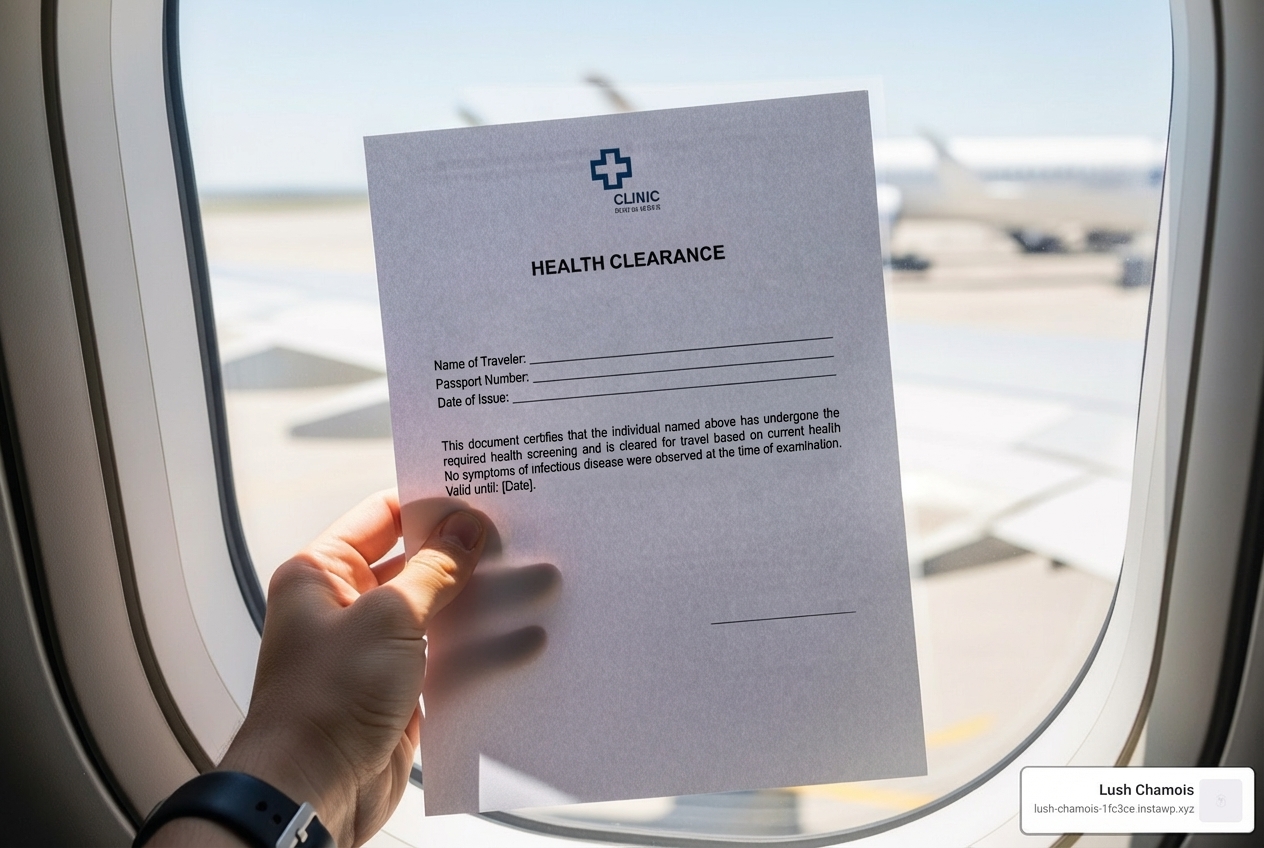
Understanding Your Travel Health Documentation
A Fit-to-Fly certificate is a medical document from a healthcare professional confirming you are medically stable and safe to travel by air. Airlines may require this certificate before boarding if you’re recently discharged from a hospital, recovering from surgery, more than 28 weeks pregnant, or have certain medical conditions.
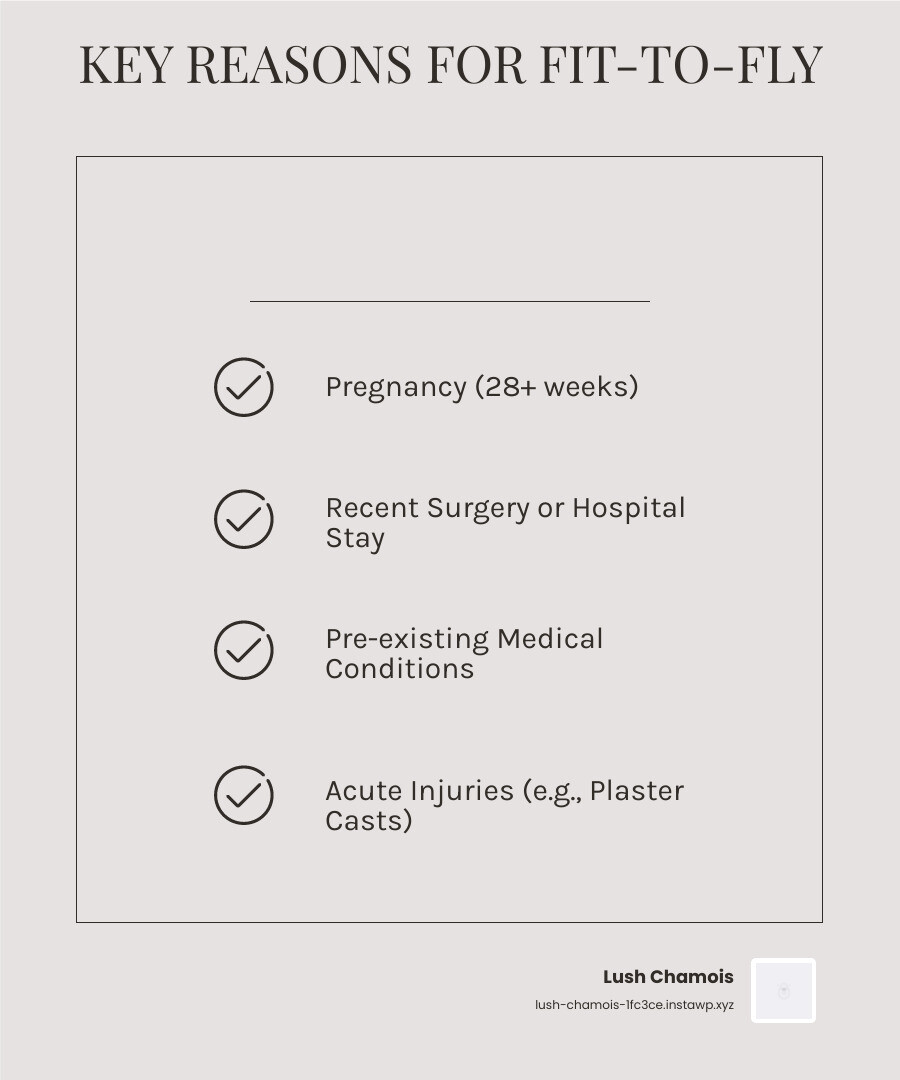
Key reasons you might need a Fit-to-Fly certificate:
- Pregnancy – Most airlines require one after 28 weeks of pregnancy
- Recent surgery – Especially chest, abdominal, or major operations
- Hospital discharge – Within days or weeks of leaving medical care
- Medical conditions – Heart problems, respiratory issues, or contagious diseases
- Plaster casts – Fitted within 24-48 hours of your flight
- Medical travel – Flying specifically to receive treatment elsewhere
With air travel returning to pre-pandemic levels, understanding medical clearance requirements is more important than ever. Airlines maintain final discretion on whether to accept passengers, even with a certificate, as their primary concern is safety.
The cost of a Fit-to-Fly certificate typically ranges from £20-£40, depending on your GP or private provider. These certificates are trip-specific and do not remain valid indefinitely; you’ll need a current assessment for each trip involving a medical condition.
What is a Fit-to-Fly Certificate and Who Needs One?
A Fit-to-Fly certificate is a formal letter from a doctor confirming you are medically well enough for air travel. It’s a medical clearance designed to ensure your safety and that of others, preventing in-flight emergencies. It’s not for every traveler, but for those whose health could be affected by flying (e.g., cabin pressure changes) or who might pose a risk to others.
Airlines, like flydubai, require a medical clearance or Fit-to-Fly certificate in various circumstances, such as traveling with a portable oxygen concentrator or flying while pregnant. Unlike a general medical certificate for a visa, a Fit-to-Fly certificate specifically addresses your ability to withstand the rigours of air travel.
| Feature | Fit-to-Fly Certificate | General Medical Certificate for Travel |
|---|---|---|
| Primary Purpose | Confirm fitness for air travel, airline requirement | Confirm general health, visa/entry requirement |
| Issuing Authority | Doctor/healthcare professional | Doctor/healthcare professional |
| Focus | Impact of air travel on health, risk of in-flight emergency | Overall health status, absence of specific diseases |
| Common Scenarios | Pregnancy (28+ weeks), post-surgery, specific medical conditions, contagious diseases | Visa applications, long-stay permits, employment abroad |
| Airline Discretion | Airlines can deny boarding even with certificate | Less direct airline involvement |
| Validity | Often trip-specific, short-term | Can be valid for longer periods (e.g., 6 months) |
| Required Information | Specifics of condition, stability, ability to fly | General health, immunizations, absence of communicable diseases |
When is a certificate typically required?
Airlines request medical clearance when there’s a perceived health risk. Common scenarios include:
- Pregnancy (28+ weeks): Most airlines require a doctor’s note confirming a healthy, normal pregnancy and your due date.
- Post-surgery recovery: A doctor’s letter is needed to confirm it’s safe to travel, especially after major operations.
- Heart conditions: If you have an unstable heart condition or have recently had a heart attack, your doctor must assess your fitness to fly.
- Respiratory conditions: For conditions like severe asthma or COPD, a note may be needed to confirm stability and any need for supplemental oxygen.
- Plaster casts: A certificate may be required for casts fitted within 24-48 hours of a flight due to swelling risks at altitude.
- Travelling for medical treatment: Airlines often require a certificate to confirm your stability for the journey.
- Contagious diseases: A certificate may be needed to confirm you are no longer infectious (e.g., scabbed-over chickenpox).
- Airline discretion: Always check with your airline in advance if you have any health condition that might raise concerns, as they have the final say.
What information is included in the certificate?
A proper Fit-to-Fly certificate should be clear, concise, and contain key details to satisfy the airline. While formats vary, it generally includes:
- Patient details: Your full name, date of birth, and passport number.
- Doctor’s confirmation: A clear statement that you have been assessed and are deemed fit for air travel.
- Statement of fitness: Confirmation that your condition is stable and you are unlikely to need extraordinary medical assistance during the flight.
- Date of examination: The date the assessment was conducted.
- Doctor’s signature and stamp: The certificate must be signed and officially stamped by a certified medical professional.
- Specific medical details (if applicable): For pregnancy, the expected delivery date. For other conditions, the nature and stability of the condition.
- Language: The certificate should be in English for most international travel.
It’s vital to ensure the certificate is legible and complete. Airlines like flydubai specify that medical certificates must be “written clearly in English or Arabic, signed and stamped by a certified medical professional…”
The Process of Obtaining Your Fit-to-Fly Certificate
Getting a Fit-to-Fly certificate requires proactive planning but is a straightforward process involving a medical assessment.
Here are the typical steps:
- Identify the need: Check your airline’s requirements or consult your doctor if you have a medical condition, are pregnant, or recently had surgery.
- Choose a provider: You can get a certificate from your family doctor (GP), a specialist, or private clinics and online medical services in Canada.
- Schedule an appointment: Explain that you need a Fit-to-Fly certificate and provide your travel details.
- Undergo medical assessment: The doctor will review your medical history and may perform a physical exam. Bring any relevant medical documents.
- Receive your certificate: If deemed fit, the doctor will issue the signed and stamped certificate. Digital certificates with QR codes are also becoming common.
Many private providers, including some online services in Canada, offer same-day certificates, which is a convenient option if you’re on a tight schedule.
How much does a fit-to-fly certificate cost?
The cost of a Fit-to-Fly certificate varies. In Canada, as in other regions, travel-related documents are typically considered non-insured services and will incur a fee.
- GP surgery fees: Costs can vary if you obtain it from your family doctor in Quebec or Ontario.
- Private provider costs: Private and online clinics often charge a set fee, which may be higher for the convenience of a rapid turnaround.
- Typical price range: While UK fees typically range from £20-£40, costs in Canada will vary. It is always best to inquire about the exact cost when you book your appointment. For reference, organizations like The British Medical Association provide suggested fees for various non-NHS services.
This cost is for the certificate only and does not include any required medical tests.
How long is a certificate valid for?
A Fit-to-Fly certificate is trip-specific and not a long-term pass. Its validity depends on your condition and the airline’s policy.
Airlines require a certificate based on a recent medical assessment, as your health status can change. A letter from months ago is unlikely to be accepted. Some airlines may specify that the certificate must be issued within a certain window (e.g., 7-10 days) before your flight. For this reason, you should plan to obtain a new, current Fit-to-Fly certificate for each trip to ensure it reflects your up-to-date health status and complies with airline regulations.
Specific Medical Scenarios and Requirements

When flying with specific medical conditions, preparation is key. Airlines prioritize safety, so certain health situations require extra documentation. It’s not about prohibiting travel, but about managing health responsibly. We always recommend planning ahead, consulting your doctor, and understanding airline policies in advance.
Flying During Pregnancy
Flying while pregnant is common, but airlines have specific rules for the safety of both mother and baby.
- The 28th-week rule: After the 28th week of pregnancy, most airlines in Canada require a Fit-to-Fly certificate from your doctor or midwife. It must confirm you are healthy, the pregnancy is normal, and state the expected delivery date.
- Further along: Most airlines prohibit travel beyond 36 weeks (or 32 weeks for multiple pregnancies) due to the increased risk of premature labour.
- Multiple pregnancies: If you’re expecting twins or more, restrictions often start earlier, typically around 32 weeks.
Always discuss travel plans with your doctor or midwife early in your pregnancy. For more general information, you can refer to resources like Flying after the 28th week of pregnancy.
Travelling with Pre-existing Medical Conditions
Many Canadians travel safely with pre-existing conditions, but some circumstances warrant a Fit-to-Fly certificate.
- Stable conditions: If your condition is stable and well-managed, you likely won’t need clearance. However, a certificate may be required if you’ve recently been discharged from the hospital, are recovering from an operation, or are travelling for medical reasons.
- Heart conditions: Most people with stable heart conditions can fly, but changes in cabin pressure can be a factor. After a heart attack or surgery, a waiting period is advised. Always consult your GP or specialist to determine if you are fit to fly.
- Asthma/COPD: Ensure your condition is well-controlled and always carry your inhaler in your hand luggage. For severe cases, a certificate might be needed to confirm your stability.
- Diabetes: This usually requires careful planning. Carry enough medication and supplies in your hand luggage, along with a doctor’s letter confirming your need for them.
- Plaster casts: For a cast fitted within 24-48 hours of your flight, airlines often require it to be split to allow for swelling. You’ll need a letter from your doctor confirming the fitting date.
- Travelling with medication: It’s always a good idea to carry a doctor’s letter if you need to take medication abroad, especially controlled substances, to confirm it is prescribed for your health.
The key takeaway is to consult your healthcare provider well before your travel date. They can assess your situation and provide the necessary Fit-to-Fly certificate or advice.
How COVID-19 Shaped Fit-to-Fly Requirements
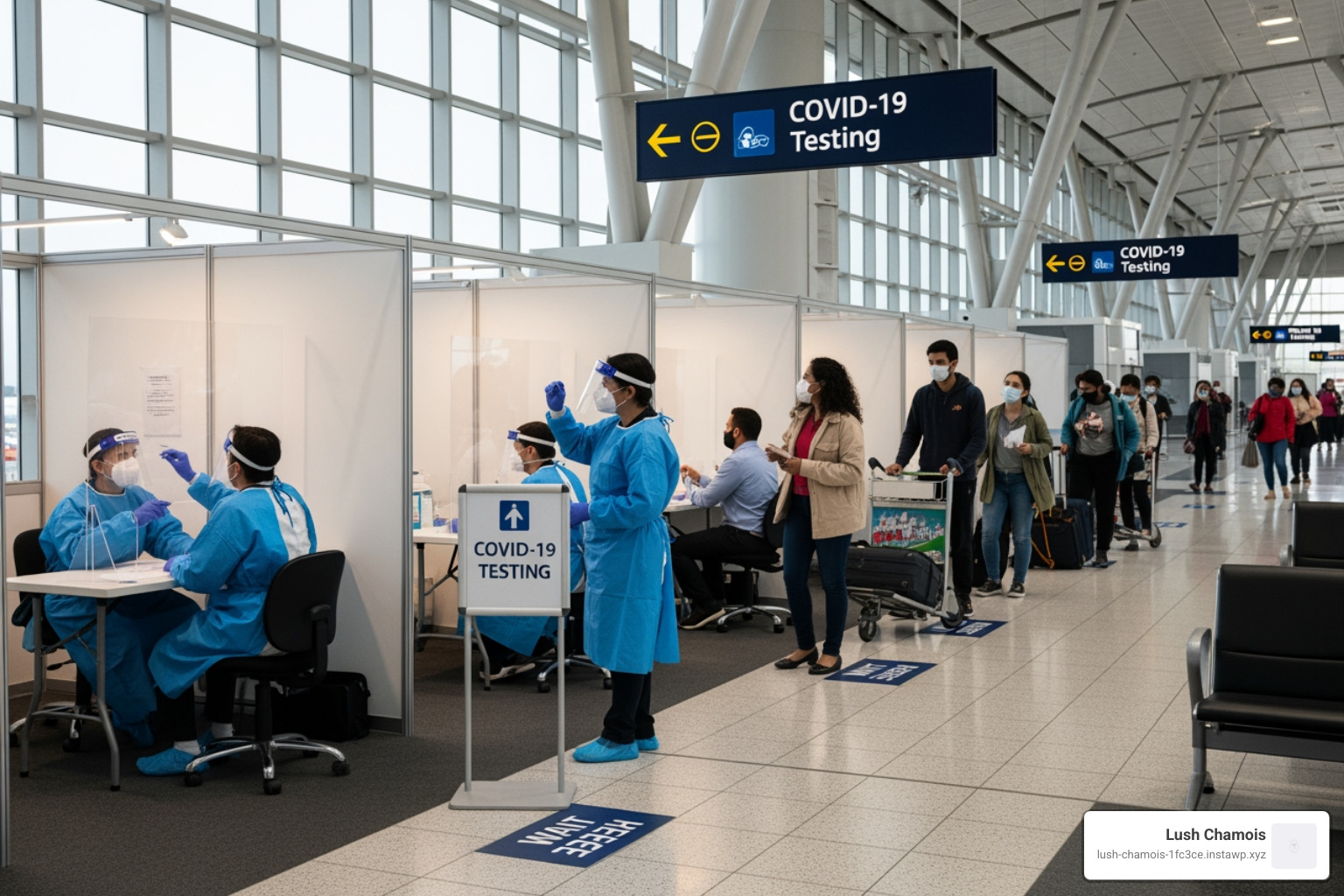
The COVID-19 pandemic had an unprecedented impact on global air travel, dramatically influencing the demand for Fit-to-Fly certificates. The focus shifted from individual medical conditions to the public health concern of preventing infectious disease transmission. International bodies like the ICAO developed guidelines for health risk mitigation, including passenger medical testing.
While many stringent COVID-19 travel restrictions have eased, the pandemic highlighted the importance of medical documentation in air travel. It increased awareness among travelers and airlines about the potential need for health certificates, embedding a greater emphasis on passenger health screening for future health crises.
What COVID-19 tests were required for a Fit-to-Fly Certificate?
During the pandemic, a Fit-to-Fly certificate often meant a document confirming a negative COVID-19 test. The types of tests and timelines varied by destination and airline.
- RT-PCR tests: These remain the gold standard for diagnosing active COVID-19. Many countries required a negative RT-PCR test for entry. Lush Chamois offers gold-standard PCR testing services in Quebec and Ontario with official documentation to help Canadians meet these requirements.
- Rapid antigen tests: Some destinations accepted these tests, which offer quicker results. Lush Chamois also provides virtual rapid antigen testing services as a convenient option for travelers.
- Testing window: A common requirement was for the test to be performed within a specific window, typically 72 to 96 hours before departure, to ensure the result was current.
- Proof of recovery: In some cases, travelers who had recently recovered from COVID-19 could present a “recovery certificate” instead of a negative test.
Although many countries have dropped their COVID-19 testing requirements, it’s crucial for Canadian travelers to check the latest regulations for their destination and airline. Lush Chamois continues to provide reliable COVID-19 PCR and virtual rapid antigen testing. If you need to meet specific travel requirements, you can Schedule a PCR test with us.
Navigating Certificate Issues and Airline Differences
Even with careful planning, issues with a Fit-to-Fly certificate can arise. Understanding the potential consequences is important.
- Denied boarding: The most immediate consequence of not having a required certificate is being denied boarding by the airline, which has the final say on safety.
- Travel delays & Financial loss: This can lead to missed connections, rebooking fees, and the loss of non-refundable flight and accommodation costs. Travel insurance may not cover these losses if you haven’t complied with all requirements.
- Repatriation issues: For international travel, being denied entry to a country could lead to immediate repatriation at your own expense.
What happens if a certificate is denied?
If a healthcare professional denies you a Fit-to-Fly certificate, it means they believe air travel poses a significant risk to your health. This usually occurs if your condition is deemed too unstable for travel.
The doctor’s primary concern is your well-being. If denied, you’ll need to delay your trip until your condition stabilizes. The most common path forward is to work with your medical team to improve your health until your doctor can confidently issue the certificate.
Commercial Flights vs. Air Ambulances
It’s important to distinguish between commercial flights and air ambulances when discussing medical travel.
- Commercial flights: For stable patients who need supervision, a medical escort can be arranged on a commercial flight. A Fit-to-Fly certificate is still essential, as the standard aircraft environment (cabin pressure, limited equipment) remains a factor.
- Air ambulances: These are essentially “flying ICUs” for critically ill patients. They offer far more flexibility for Fit-to-Fly approvals because they provide a controlled medical environment. Some can even maintain sea-level cabin pressure, which is crucial for patients with altitude-sensitive conditions. This makes travel possible for those who are too unstable for commercial flights.
While air ambulances are an invaluable service for complex medical transfers, they are a significantly more expensive option. For most Canadian travelers, the focus will be on obtaining the necessary Fit-to-Fly certificate for standard commercial travel.
Conclusion
Navigating air travel with medical considerations requires understanding the essential Fit-to-Fly certificate. We’ve covered what it is, who needs it, how to get one, and the specific scenarios that require it, from pregnancy to pre-existing conditions and the lingering impact of the COVID-19 pandemic.
The key takeaways are clear:
- Preparation is paramount: Always check airline and destination requirements well in advance.
- Consult your doctor: If you have a medical condition, are pregnant, or recently had surgery, your healthcare provider is your best resource for assessment and obtaining a Fit-to-Fly certificate.
- Timeliness matters: Ensure your certificate is current and obtained within the airline’s specified timeframe.
- Don’t risk it: Travelling without a required certificate can lead to denied boarding and financial loss. Your safety should always come first.
At Lush Chamois, we understand the importance of stress-free travel. While we don’t issue the Fit-to-Fly certificate itself, we provide convenient and reliable COVID-19 PCR and virtual rapid antigen testing services in Quebec and Ontario, complete with official documentation. Our goal is to offer peace of mind with access to gold-standard and rapid tests when you need them.
Safe travels are informed travels. Take the necessary steps, get the right documentation, and enjoy your journey.