
Why Getting a PCR Test Flight Certificate Matters for Your Journey
A pcr test flight certificate is your official proof of a negative COVID-19 test result, required by airlines and countries to board international flights and enter many destinations. While travel restrictions have relaxed significantly since the pandemic’s peak, many travelers still need this documentation for specific routes, visa requirements, or personal peace of mind.
Quick Answer: How to Secure Your PCR Test Flight Certificate
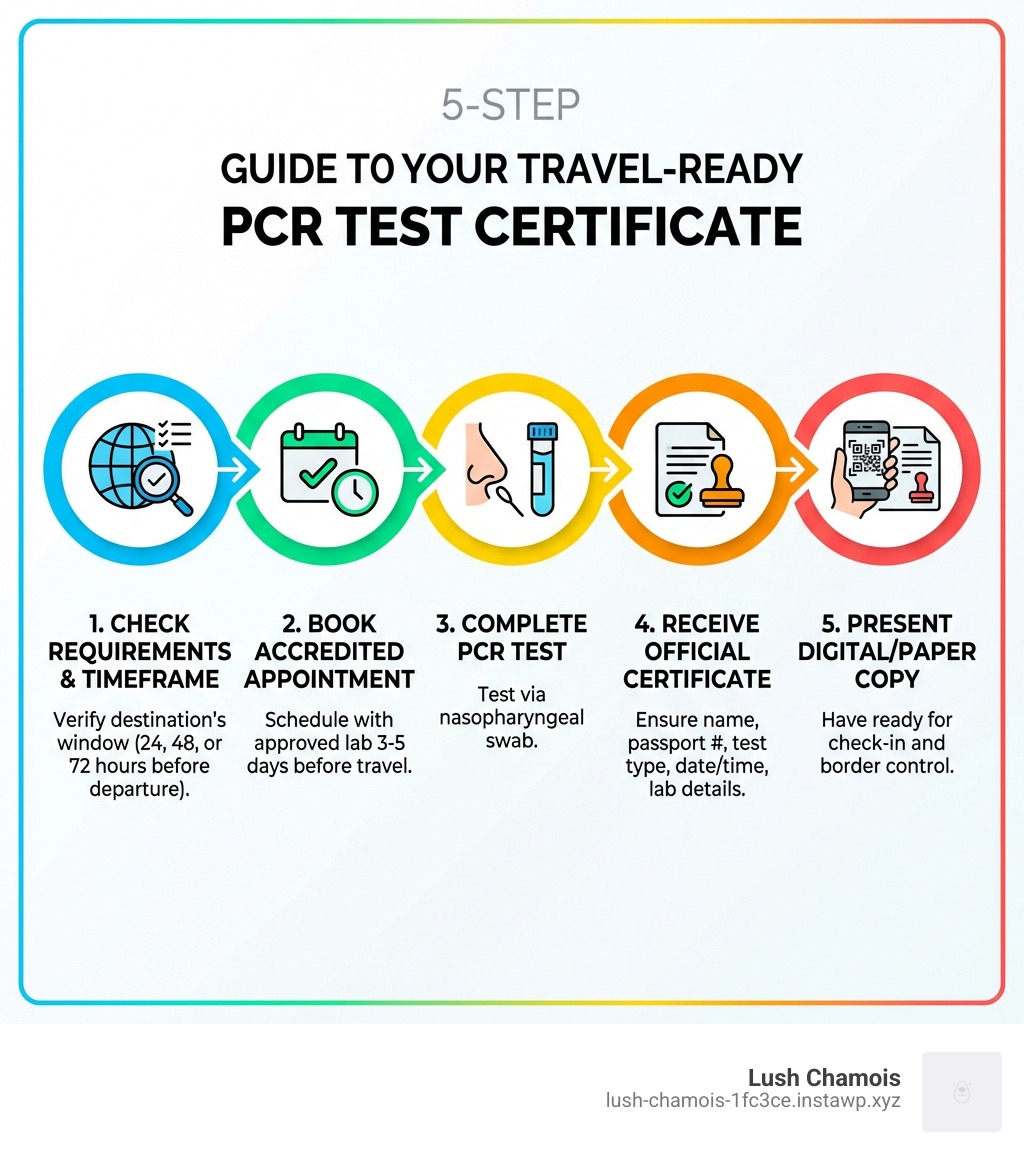
- Check requirements – Verify your destination’s testing window (24, 48, or 72 hours before departure)
- Book with an accredited provider – Choose a lab that issues travel-specific certificates with all required details
- Get tested on time – Schedule 3-5 days before travel to allow for results
- Verify your certificate – Ensure it includes your name, passport number, test type (PCR/NAAT), collection date/time, and lab details
- Keep digital and paper copies – Have both formats ready for airline check-in and border control
The landscape of travel testing has shifted dramatically. In 2021, over 1.5 billion COVID-19 tests were conducted globally, with airlines reporting a 50-70% surge in travel-related testing demand. Today, most countries like Canada have removed mandatory testing for entry, but specific airlines, destinations, and travel scenarios still require proof of a negative PCR test.
PCR tests remain the gold standard for travel because they detect viral RNA with high accuracy (minimum 95% sensitivity and specificity according to ICAO guidelines). Unlike rapid antigen tests, PCR results are universally accepted by airlines and border authorities worldwide.
The challenge? Navigating which test you need, when to take it, and how to get proper documentation. A missed testing window or incorrect certificate format can mean denied boarding and cancelled plans. That’s where understanding the process—and working with a reliable testing provider—becomes essential.
Understanding the PCR Test Flight Certificate
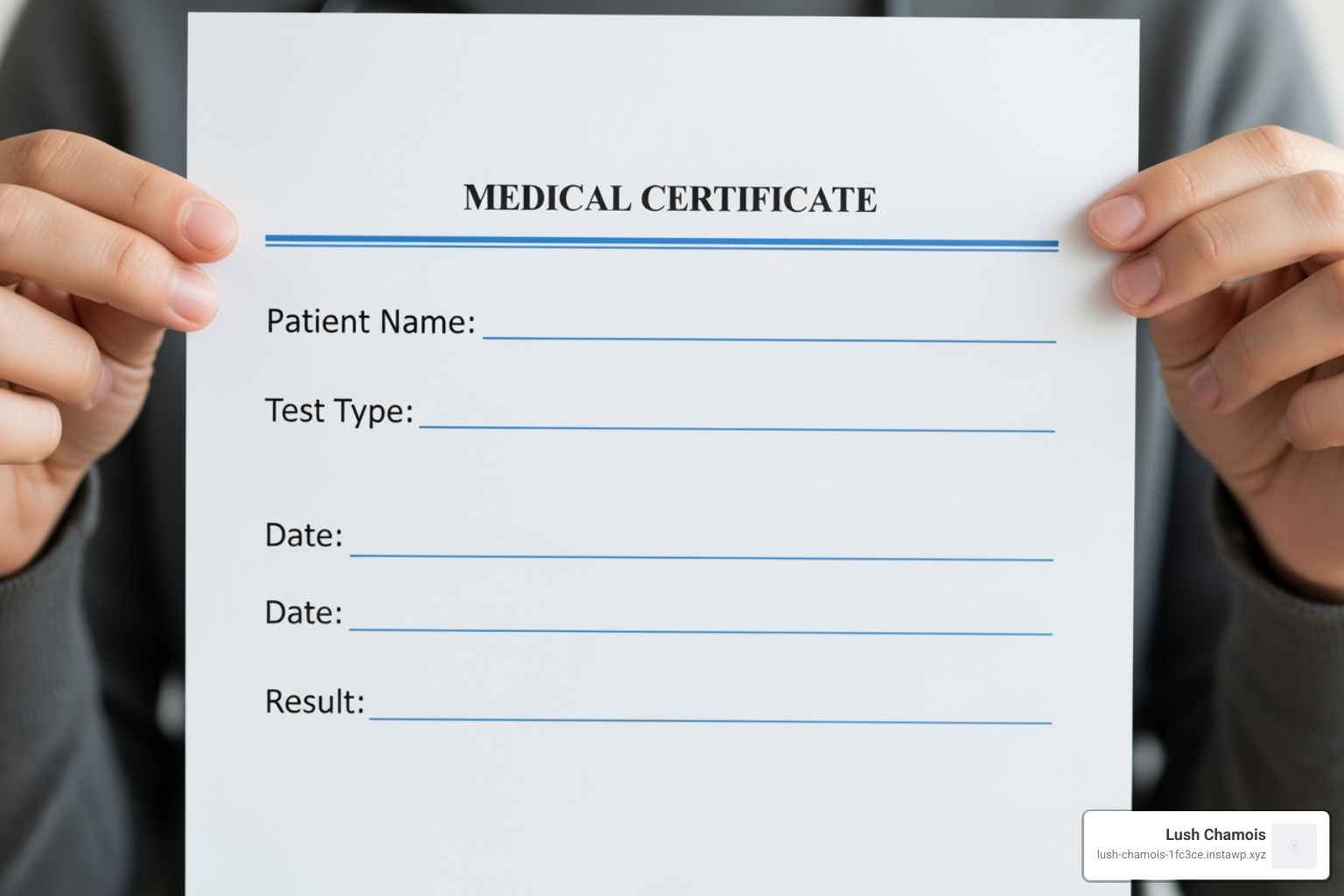
Imagine your pcr test flight certificate as your passport to peace of mind, both for yourself and for the countries you wish to visit. It’s more than just a piece of paper; it’s a critical medical document that verifies your health status concerning COVID-19, proving that you’re not actively carrying the virus. This document, often referred to as a “fit-to-fly certificate,” is a formal declaration based on a laboratory-confirmed negative PCR test result.
What is a PCR test flight certificate and why is it essential?
A pcr test flight certificate is an official document issued by a certified laboratory or healthcare provider, stating that you have tested negative for SARS-CoV-2 (the virus that causes COVID-19) via a PCR test. It typically includes your personal identification details, the type of test performed, the date and time of sample collection, the test result, and the details of the issuing laboratory or clinic.
Why is this document so crucial for international travel?
- Proof of Negative Result: It serves as irrefutable evidence that you do not have an active COVID-19 infection at the time of testing.
- Preventing Virus Spread: By requiring this certificate, airlines and countries aim to reduce the risk of international transmission of the virus, safeguarding public health at large.
- Boarding Clearance: Many airlines will deny boarding to passengers who do not present a valid pcr test flight certificate that meets their specific requirements and those of the destination country. For instance, in the past, airlines like Air Canada required travelers to upload their COVID-19 test results before travel, highlighting the airline’s role in verification.
- Border Control and Entry: Upon arrival, border control officers in many countries will require this certificate as part of their entry protocols. Without it, you could face denied entry, mandatory quarantine, or even immediate return to your point of origin. The International Civil Aviation Organization (ICAO), a specialized agency of the United Nations, has developed comprehensive guidance for States on standardizing these certificates to ensure international recognition and interoperability.
Essentially, a pcr test flight certificate acts as a health clearance, ensuring that you meet the necessary health standards for safe travel, protecting both you and the communities you engage with.
How travel testing has evolved
The journey of travel testing requirements has been nothing short of a rollercoaster, reflecting the dynamic nature of the pandemic itself. At the peak of the pandemic, mandatory PCR testing for international travel was widespread. Countries globally, including Canada, implemented strict pre-departure testing requirements for air travelers. For example, in January 2021, the Government of Canada formalized new pre-departure COVID-19 testing requirements for all air travelers flying into Canada, requiring a molecular PCR or LAMP test within 72 hours of departure. Failure to comply meant automatic denial of boarding.
As the global situation evolved, there was a gradual shift. Proof of COVID-19 vaccination became an alternative or supplementary requirement, leading to the development of digital certificates like the EU Digital COVID Certificate, which aimed to validate vaccination, testing, or recovery status for air transport within Europe.
Today, we’ve seen significant relaxation in many parts of the world. For travelers entering Canada by air, land, or marine mode, proof of COVID-19 vaccination is no longer required, pre-board testing is not required, and COVID-19 pre-entry and arrival tests are not required. Even using the ArriveCAN app is no longer mandatory, though it can still save time at the border. You can find the most up-to-date information on Canada’s travel requirements on the official COVID-19: Travel, testing and borders website.
However, this doesn’t mean the pcr test flight certificate is a relic of the past. While Canada has largely eased its restrictions, many other countries and specific airlines continue to enforce their own testing mandates. For example, the US previously required proof of a negative COVID-19 test for all air passengers arriving in the country. Travelers must still exercise diligence in researching and adhering to the specific entry requirements of their destination and any transit countries. The global market for COVID-19 testing, valued at over $100 billion in 2021, underscores the immense demand for such services during the pandemic’s peak, and while demand has waned, the need for specific travel scenarios persists.
PCR Test for Travel: Why It’s the Gold Standard
When it comes to proving your COVID-19 status for international travel, not all tests are created equal. While various tests emerged during the pandemic, the PCR test consistently held, and largely still holds, the top spot as the “gold standard” for accuracy and reliability. This is particularly important when your travel plans depend on a universally accepted medical certificate.
The Gold Standard: PCR (Polymerase Chain Reaction) Tests
So, what makes the PCR test so special? It all comes down to its scientific approach. A PCR test is a molecular test that works by detecting the genetic material (RNA) of the SARS-CoV-2 virus. Using a process called Polymerase Chain Reaction, it amplifies these genetic fragments, making it possible to detect even very small amounts of the virus in a sample. This is typically collected via a nasopharyngeal swab, a gentle process where a thin, flexible stick with a cotton tip is inserted a few centimeters into the nose.
Here’s why we consider it the gold standard:
- High Accuracy and Sensitivity: PCR tests boast high sensitivity and specificity, meaning they are very good at correctly identifying those who have the virus (true positives) and those who do not (true negatives). According to ICAO guidance, molecular tests like PCR should aim for a minimum sensitivity and specificity of 95% for reliable results. This superior accuracy reduces the chances of false negatives, which is crucial for preventing the spread of the virus during travel.
- Laboratory Analysis: Unlike rapid tests, PCR tests require specialized laboratory analysis. While this means a longer turnaround time, it also ensures a more thorough and reliable result, processed by trained professionals.
- Most Widely Accepted for Travel: Due to its high reliability, the PCR test result, accompanied by a valid pcr test flight certificate, is the most widely accepted form of COVID-19 testing for entry into various countries and by airlines worldwide. This universal acceptance minimizes the risk of denied boarding or entry upon arrival.
To illustrate the difference, let’s look at a quick comparison:
| Feature | PCR Test | Rapid Antigen Test |
|---|---|---|
| Accuracy | High (detects genetic material/RNA) | Moderate (detects viral proteins/antigens) |
| Sensitivity | Very High (gold standard, detects low viral load) | Lower (may miss early or late infections) |
| Result Speed | Typically 24-72 hours | 15-30 minutes |
| Travel Acceptance | Widely accepted by most countries and airlines | Accepted by some countries/airlines, often for screening |
| Cost | Generally higher | Generally lower |
| Lab Required? | Yes | No (can be point-of-care) |
Our goal at Lush Chamois is to provide you with access to these gold-standard tests, ensuring that your pcr test flight certificate is recognized and accepted wherever your travels take you. We understand the importance of reliable results and official documentation, all delivered by Canadian healthcare professionals.
How to Get Your PCR Test Flight Certificate: A Step-to-Step Guide
Securing your pcr test flight certificate might seem like a daunting task, but with a clear plan and the right resources, it can be a smooth part of your pre-travel checklist. Planning ahead is key to avoiding last-minute stress and potential travel disruptions.

Step 1: Verify Your Destination’s Requirements
This is arguably the most critical step. Travel rules are dynamic and can change rapidly, sometimes with very short notice. What was true yesterday might not be true tomorrow.
- Destination Country Regulations: Always start by checking the official government website of your destination country. Look for specific information on COVID-19 entry requirements for international travelers. Pay close attention to:
- Type of Test: Is a PCR (molecular) test required, or is a rapid antigen test acceptable? While Canada has lifted its testing requirements, many other nations still demand a PCR test.
- Testing Window: This is crucial. Most countries specify that the test must be taken within a certain timeframe before your scheduled departure or arrival. Common windows are 24, 48, or 72 hours. For example, in the past, the US required tests to be taken no more than 3 days before travel for air passengers.
- Documentation: What information must be included on the certificate? Is a digital or paper copy preferred? Does it need to be in English or a certified translation?
- Transit Country Rules: Don’t forget about any countries you might be transiting through. They may have their own separate entry or transit requirements, even if you’re just passing through the airport.
- Airline Rules: Your airline might have additional requirements beyond those of the destination country. Always check your airline’s official website or contact them directly. Airlines often have systems for uploading documents, like Air Canada’s portal for COVID-19 health documents.
We recommend checking these requirements not just when you book your trip, but again a few days before your departure. Government advisories and travel health advisories, such as those provided by travel.gc.ca, are excellent resources.
Step 2: Book Your PCR Test with a Trusted Provider
Once you know exactly what you need, it’s time to book your test. Choosing a reputable and accredited provider is paramount to ensure your pcr test flight certificate is legitimate and accepted.
- Accredited Clinics: Look for clinics and laboratories that are officially recognized and licensed to perform COVID-19 testing. In Canada, this often means Health Canada licensed facilities.
- Lush Chamois Testing Services: We pride ourselves on offering convenient and reliable PCR and virtual rapid antigen testing services across Canada, including Quebec and Ontario. Our services are designed to be stress-free, providing you with gold-standard tests and official documentation from Canadian healthcare professionals. We offer:
- Walk-in Visits: For those who prefer to visit a clinic.
- At-Home Visits: For maximum convenience, our Canadian healthcare professionals can come to you.
- Online Booking: Our easy-to-use platform allows you to schedule your appointment efficiently.
- Importance of Timing: This is where Step 1 and Step 2 intersect critically. You need to schedule your test precisely to fall within your destination’s required testing window while also allowing enough time for results to be processed and your certificate issued. While we strive for prompt results, typical PCR test results are usually available within 24-72 hours. We aim to deliver PCR swab test results and travel certificates within 24 hours. For critical travel, planning 3-5 days ahead allows a comfortable buffer.
To learn more about our services and book your appointment, visit our comprehensive page on More info about testing services.
Step 3: Ensure Your Certificate Contains the Right Information
A valid pcr test flight certificate isn’t just about a negative result; it’s also about comprehensive and accurate documentation. Airlines and border officials will scrutinize the details on your certificate.
Your pcr test flight certificate should typically include:
- Full Name: Must match your passport or travel identification exactly.
- Date of Birth: To verify your identity.
- Passport Number (or other official ID): This links the certificate directly to your travel document.
- Test Type: Clearly state “PCR” or “NAAT” (Nucleic Acid Amplification Test).
- Sample Collection Date and Time: Crucial for verifying that the test was taken within the required window.
- Test Result: Clearly state “Negative” or “Not Detected.”
- Issuing Laboratory/Clinic Details: Including the name of the lab, its address, and contact information. This confirms the test was performed by an accredited facility.
- Healthcare Professional Signature: An official signature from a Canadian healthcare professional adds to the certificate’s authenticity.
- QR Codes (if applicable): Some digital certificates use QR codes for quick verification.
Our official documentation is designed to meet these stringent requirements, providing you with a certificate that is accepted globally. We understand that precision matters, and our team ensures all necessary fields are accurately completed.
Common Challenges and How to Overcome Them
Even with meticulous planning, international travel during these times can present unforeseen problems. Understanding potential challenges with your pcr test flight certificate and knowing how to steer them can save you a lot of stress.
What if I test positive before my flight?
This is perhaps the most significant challenge a traveler can face. If your PCR test comes back positive before your flight, here’s what you should do:
- Isolating Immediately: Your first priority is to follow public health guidelines for isolation in your province (Quebec, Ontario, or other parts of Canada). This helps prevent further spread. You can find provincial or territorial requirements for what to do if you’re symptomatic or have tested positive on the official provincial or territorial requirements page.
- Cancelling or Rebooking Travel: Contact your airline, hotel, and any other travel providers immediately. Many airlines and accommodations offered flexible rebooking policies during the pandemic; check if yours still do.
- Contacting Your Travel Insurance Provider: If you have travel insurance, review your policy. Many policies cover trip cancellation or interruption due to a positive COVID-19 test, but terms vary. We always recommend comprehensive travel insurance.
- Prioritize Health: While disappointing, a positive test means your body needs to recover. Your health and the health of others are paramount.
Navigating costs and result turnaround times
The cost and speed of PCR tests for travel can vary.
- Typical PCR Test Costs: Private PCR tests for travel generally range in price. While we don’t list specific competitor pricing, our services are competitively priced to offer value and reliability.
- Express Service Fees: Many providers offer expedited or “rapid PCR” services for an additional fee, promising results in a few hours rather than a day or two. This can be a lifesaver if you have a tight testing window.
- Standard vs. Expedited Results: Standard PCR tests usually provide results within 24 to 72 hours. Expedited services can cut this down significantly. When booking with Lush Chamois, we will provide you with estimated turnaround times, and our Canadian healthcare professionals work efficiently to get your results to you as quickly as possible.
- Provider Guarantees: While we strive for timely delivery of results, it’s important to understand that no laboratory or provider can absolutely guarantee results by a specific time due to the complex nature of lab processes and potential unforeseen circumstances. We always recommend building in a buffer to your travel plans.
When considering costs, investing in a reliable PCR test and a properly formatted pcr test flight certificate from a trusted provider like Lush Chamois is an investment in a stress-free journey.
Frequently Asked Questions about Travel Testing
We understand you might have more questions. Here are some common queries we encounter regarding pcr test flight certificates and travel testing.
What happens if my flight is delayed and my test certificate expires?
This is a common concern, especially with the potential for flight disruptions. If your flight is delayed and your pcr test flight certificate falls outside the validity window (e.g., beyond 72 hours before the new departure time), you will likely need to get re-tested.
- Contact the Airline Immediately: Inform your airline about the delay and the potential expiration of your certificate. They may have specific protocols or offer some flexibility, especially if the delay is their fault.
- Re-testing Options: If re-testing is necessary, you’ll need to find an accredited provider at your current location. Lush Chamois offers convenient testing services across Canada, including Quebec and Ontario, which can be invaluable in such situations. We can help you schedule a new test quickly, potentially even at an at-home location if you’re stuck near an airport or hotel.
- Plan for Contingencies: While rare, consider what you would do if you needed an emergency re-test. Knowing where local accredited testing centers are, or having access to a service like ours, can be a huge advantage.
Can I use a test from a public health clinic for my PCR test flight certificate?
Generally, no. While public health clinics offer essential testing services, their primary purpose is public health surveillance and diagnostic testing, not providing travel-specific documentation.
- Public vs. Private Testing: Public health tests typically do not include the specific details (like passport numbers, specific test dates/times formatted for travel, or official signatures on specific letterheads) required for a pcr test flight certificate. They are often just a result notification.
- Travel-Specific Documentation: Travel certificates require a precise format that includes all the identifying information needed by airlines and border officials.
- Verifying Provider Eligibility: Airlines and countries usually require tests from accredited private laboratories or healthcare providers that explicitly issue travel certificates. Our services at Lush Chamois are custom specifically for travel, ensuring your documentation meets international standards and is issued by Canadian healthcare professionals.
What if I have recently recovered from COVID-19?
Some countries offer an alternative to a negative PCR test for travelers who have recently recovered from COVID-19. This is often referred to as “documentation of recovery.”
- Documentation of Recovery: This typically requires two components:
- Proof of a Positive Viral Test: This must be a positive PCR or antigen test result, usually taken within a specific timeframe (e.g., the last 90 days, as was required for entry into the US).
- Letter from a Healthcare Provider: You’ll need a signed letter, on official letterhead, from a licensed healthcare provider or public health official. This letter must state that you have recovered from COVID-19 and are cleared to travel.
- Checking Destination Acceptance: It is absolutely vital to verify if your destination country accepts documentation of recovery as an alternative to a negative test. Not all countries do, and the specific requirements (e.g., the timeframe for the positive test) can vary.
- Accuracy and Trust: Even with documentation of recovery, some travelers choose to get a negative PCR test for added peace of mind or if there’s any ambiguity in the destination’s rules.
Conclusion: Travel with Confidence
Navigating international travel and its evolving health requirements can feel like a complex puzzle. However, with the right information and a reliable partner, securing your pcr test flight certificate can be a straightforward step in your journey.
We’ve explored what a pcr test flight certificate is, why it remains essential for many international trips, and why the PCR test is considered the gold standard for travel due to its accuracy and widespread acceptance. We’ve also walked through the crucial steps to obtain your certificate, from verifying destination requirements to booking with a trusted provider and ensuring your documentation is flawless.
The key to a stress-free travel experience lies in meticulous planning and staying updated on the latest rules for your destination and any transit points. While Canada has largely eased its entry restrictions, the world is a big place, and other countries’ rules still apply to you as a Canadian traveler.
At Lush Chamois, we are committed to making this process as convenient and reliable as possible. Our services, delivered by Canadian healthcare professionals across Quebec and Ontario, provide you with the gold-standard PCR tests and official documentation you need. We understand the value of your time and peace of mind.
Don’t let uncertainty about testing requirements deter you from your next adventure. Plan smart, test reliably, and travel with confidence.